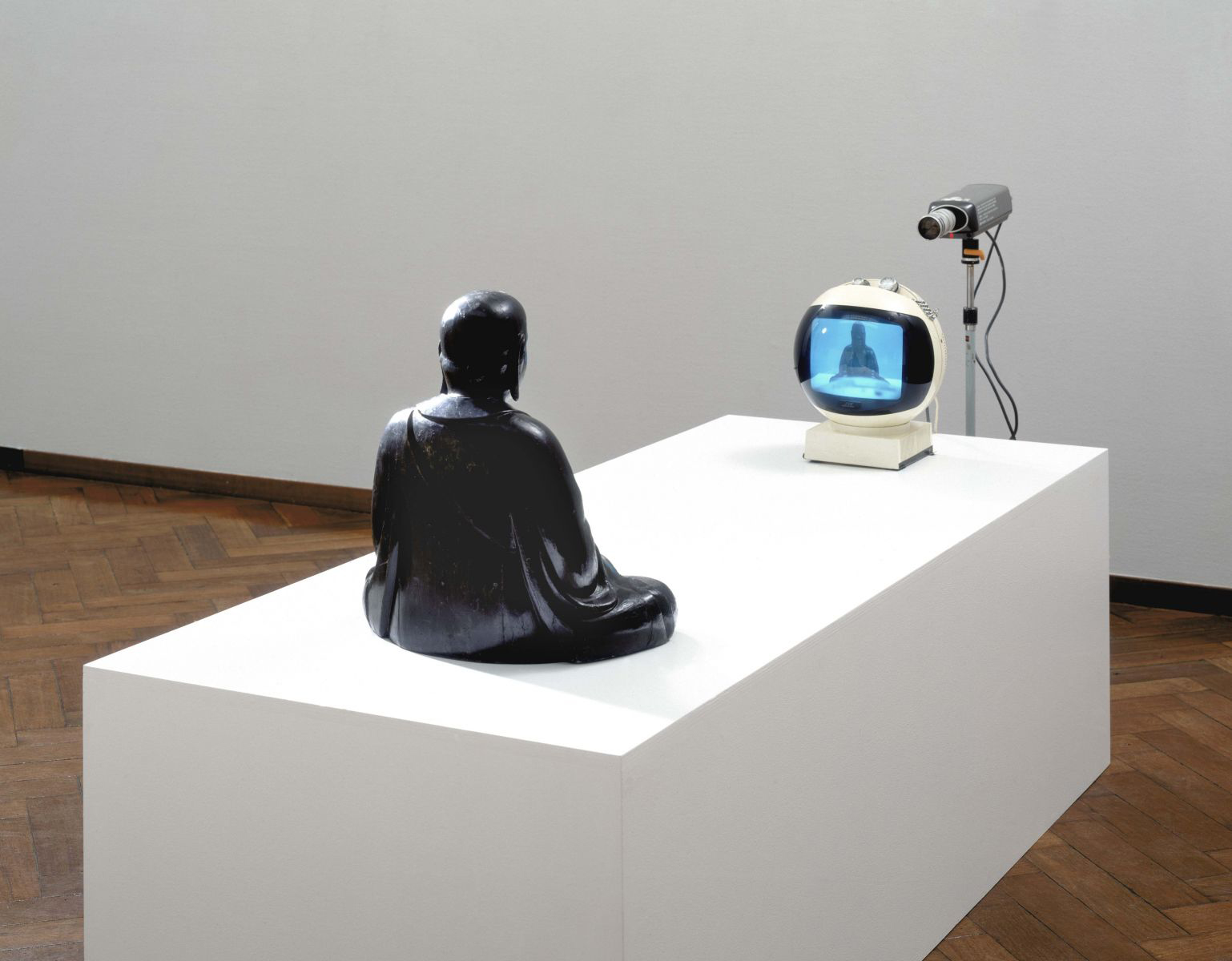
When is art design and when is design art. The separation of art and design like it was 10 years ago seem to merge nowadays and will be even more blurred in the future I would say. It is important, that those two fields which are very near to each other can exchange discourses and interact with each other.
In earlier days, this question was much easier to answer; Design was for a certain purpose. Coming from the industrial design as the classic discipline, the function was in the main focus, when art had to fulfil primarily visual aspects (and later also political ones). The growth of these two sections generated new fields which can be seen as both; art and design, depending of the context.
The word “innovation” is used in many fields nowadays, especially in companies that try to seem advanced. Focusing mainly on the job as designer, whose job basically is to be creative and therefore innovative, we talked about different methods of gaining innovative ideas.
Innovation through observation
Observation is probably the most powerful tool in order to stimulate thoughts, which eventually lead to new ideas for products, processes or improvements. By defining ourselves (designers) as observers, we distinguish ourselves from the rest of the users and customers, which are only consuming. We can observe several happening in and around us: observe ourselves, observe other people, observe nature.
observing ourselves
This can happen in our daily life. It’s purpose is mainly to just question things that we usually take for granted. We have to ask the question: Why (or why not) is it this way?
observing people
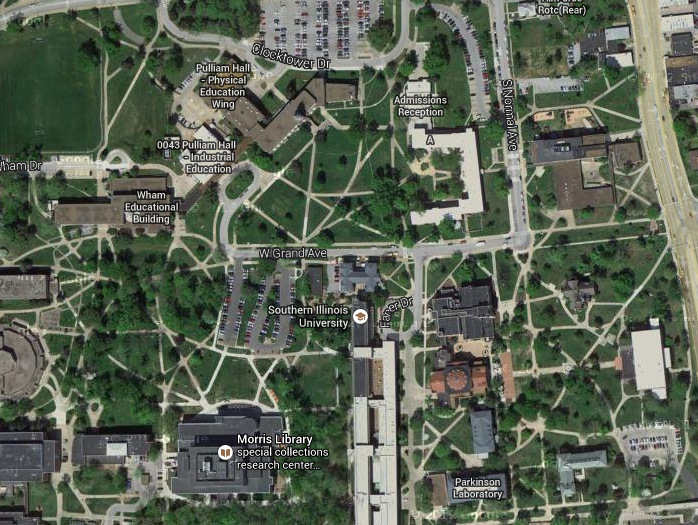
Observing peoples behaviour, can often lead to ned ideas. It is the best way, to see products in action, and therefore also misuses or hacks (so called life hacks) that could lead to an inspiration for new products. And example of this could be the paths of the southern university of illinois, where they took the desired paths of the people and paved them afterwards, instead of creating new ones at the very beginning. Here, the desire of the people formed an inspiration.
Nature is a very big resource to gain creativity from. The evolution made it’s processes very efficient and thus beautifully looking. A very nice Inspiration!
What do we use Visuals Abstractions (e.g. Sketches, Mind Maps, Graphs etc.) for? Especially in our role as designer; When does it make sense to use not the final product/design as representative, but rather raw sketches or fancy diagrams. We talked about the powers and weaknesses of visual abstractions in this weeks course.
Where everything began
As almost in every design field that tries to be settled in a historical context, the origin of visual abstractions could be found in the (possibly) first human paintings; cave drawings. People tried to manifest their experiences, thoughts, wishes and dreams by drawing on cave walls with rudimental tools. Of course, they weren’t able to draw photorealistic objects, therefore this can be seen as an early phase of abstraction.
Some millennials later, when people started to discover the world (especially by sailing over the seven seas) a system had to fulfil the need for orientation. That’s the birth of cartography. Later on, statistical visualisations began to be more and more part of our daily perception.
How can we use visual abstractions as designers?
Especially visual abstractions are no meant to look beautiful at first glance, but rather to follow a certain need. In case of the designer, there are two main focus on how those can be used; to visualise one’s process or to sell an idea. In both cases, visuals can tell other people a lot, and decides eventually if they agree with your idea or not. Visuals are also able to manipulate. With that in mind, we can play with color, saturation and size of how things are presented, in order to direct the audiences opinions.
This week, our class got informed about Evaluation in the design process.
Evaluation is (at least for me) one of the key-parts of any design process. A process without evaluation makes the possibility that a product or outcome could become completely useless pretty high. As the epimology of the word evaluation explains (french: evaluer, ex: out, from, valuer: be good, be of value) it is about capturing the positive side of sth. It is very important to recognise a products weakness and strengths by testing it and thinking about actions and their reactions.
Where and when to evaluate?
Of course it is important to do evaluation at several steps all over the design process. The outcomes of the evaluation deliver us different information and insights depending on what phase we look for it. This could for example happen in early ideas, prototypes an of course in existing/finished designs. To crystallise the value out of something we are targeting, we can use a lot of different methods and tools:
Stories are a very powerful tool as a designer. We can use it for methods in order to gain creativity, proof of concept, and future thinking, but also as a tool to sell our product to a company.
The Narration in the Design Process
The Exploratory play for example, is just one of many narration techniques, that can be used in a design process. It describes how we can come up with new ideas by just rearranging and recombining parts of stories, in order to gain new outcomes which can lead to new views, perspectives and therefore new ideas for a design problem.
Another method is the filtering, which allows us to proof our concept against a specific scenario where the product is meant to be settled in. It describes the way of placing your concept into a scenario in order to proof if it sounds reasonably right or not. If not we have to iterate in our idea finding. Filtering can also be a nice way to get other people to know your ideas.
A way to gain creativity for new projects or concepts is to look back in history to get an inspirational view of the past. What has been done and why. A good example for this is the the methodology of media archeology where artists and designers, hackers and people of the do-it yourself community take a look to the past in order to understand the evolution of nowadays media technology. This acknowledgement leads to different outcomes, for example circuit hacking or contemporary media art.
Narration is also a nice tool to sell, whether it is just an idea or a finished product. Although, the content of the story may be important, the way how and whom we tell the stories to shall not be forgotten. This is where the four levels of decision influences by Christoph Loch are developed, in order to understand a companies organisation structure. This can help to get to know how and where we as designers have to place our arguments that result in agreement. This influencing and manipulating can give us the opportunity to place our design the most efficient in a companies structure.
Manipulation through storytelling
Nowadays, especially with the rise of modern media, stories have a big impact to people. People try to spread information to influence people, often for their own purpose. We as designers can use this technique, in order to sell our products and designs to companies and finally to the user. But we have to take care that do not oversell our idea. Marketing is important but useless if there is no reasonably good product behind it.
Prototyping describes the way of checking your design against reality. This can be done in very different ways and at several stages in ones design process. It is possibly the most powerful tool for a designer to work with.
Why do we do Protoyping?
Its a fairytale that designers come up with the design solution (that solves every problem) without iterating. Making prototypes allow us to evaluate an idea of our design but also to recognise faults. It is important to check our idea in real-life since a desingers mind cannot consider every level of a product just by thinking. Especially when it is about checking your concept (so called proof of concept), it makes sense to do so as early as possible in the design phase in order to avoid big changes which results in big costs.
Often Prototypes are not only used to check the overall working of a product but rather to evaluate specific topics. These so called filter prototypes can target following topics: appearance, date, functionality, interactivity, spatial structure.
Prototyping Terminology
In the classical design journey from a design to a final product, there are several stations of testing and evaluating. To make things clear, Jean-Baptiste Labrune introduced us to several stations and told us how they differentiate from each other;
Proof of Concept is not a product and will never be. It is there, to free the designers mind with an idea. It doesn’t necessarily have to work. It is often done by narratives/storytelling in order to place an idea in an environment to check it against a situation.
Mockup describes a prototype that completely disregards constraints of the final product and their production. It serves on one hand inspiration and on the other hand the freedom of producing an idea.
We as humans experience our surroundings in many different ways. Therefore a product, which is designed for a purpose tend to evoke such experience. In the evolution of product design, this experiences seem to play a bigger role more and more. There is a clear tendency of a shift from product to experience; Experience is the product!
The early beginning of a deploying a user experience can be described through the launch of the Kodak brownies camera. Its intention was to create a community (and contest) through their technological product. This describes a feeling of association which emerges from a design. This feeling is called User Experience (in short UX). There are different Types of UX-Types, a product could aim for: Self-Expression, Haptic Experience, Emotional Experience and Immersive User Experience.
When we look back in history we realise, that internet changed a lot in our daily experience. The way we look for public transport connections, watch movies, book flights and journeys and also look for accommodations is very different compared to products 50 years ago. Technology goes along with the experience.
User Experience and new media
The rise of the new media gave us the ability of digital inclusion, free culture (and many more aspects), but also networked sociality through social media platforms (eg. twitter, facebook, myspace,…). Social media is a interesting topic, especially in terms of User Experience. These platforms are driven by the users experiences. The best example here is the introduction of the like button by facebook; This like button ended in a rewarding system for presenting up the most interesting life on the web. Most social media platforms make use of this data by sell it to other companies. The system of social media could therefore be described as exchange of data for user experience.
This time our class got introduced to HCI (Human-Computer-Interaction) and Design Methods of User centred Design. Since the user is the person which is going to use the design at the end, it makes clear sense to involve them in the process of creation as much and as early as possible.
Cooperative Design – Good Idea without Outcome?
One method to look at is the cooperative design process. As the name may reveals, the designer tries to force a cooperation between different stakeholders, in order to recognize different point of views. A very interesting example of the creation of the new city district ‘Zürich West’ in the 1970s got presented to us by Andreas Fürer; The government invited several sections, representing the city’s population in order to get their intention and opinions about the development of that part of the city.
Cultural Probes
Cultural Probes are a nice way to get a overview of a mood of your target group. By giving them little tasks to do, which they’ll return to the research team after a certain time period. Those little tasks can be for example taking photos with a disposable camera, drawings, or just answering question. The intention of the cultural probes is to give get knowledge out of ones mind that you would probably never get when asking them directly. What is important, when setting up those probes is that we as designer have to take in account what we want to ask for and how we ask for it. Open questions for example lead to a more defined answer (by the participant), than non-open-questions (Yes or No – Questions).
Designer don’t have to necessarily design objects
My non-artistic friends may see the job of a designer focused on creating new tools for the consumeristic market like paw-brushes for dogs or toasters that are connected to the internet. But design can be much more than that. Especially when it is about to design a community, specified processes arise are created. Often in those outcomes not only only one person is involved. Therefore it makes sense to split up work, and collaborate.
In this weeks class we talked about different texts and their approach to design for daily things. In my opinion it is much about perspectives/points of views to look at a design problem.
Design Characteristics by John M. Caroll
In the second chapter of his book “Making Use” John M. Caroll describes an accurate way to organise one’s design process. Since every trigger to start such a process is a problem, you have to be clear about it first. Let’s have a look to the five steps:
Clarifying the problem
Illustrate the solution (making it tangible for others)
Reduce the design to its wherewithal
Integrate diverse knowledge and skills
Anticipate impact on human activity
This list may look very abstract at the first glance, though they make sense and are settled in various design processes such as the Zimbabwe Bush Pump.
This example of a design in the everyday context, researched by Marianne de Laet and Annemarie Mol, show a successful design-process, where a big amount people were integrated. The Zimbabwe Bush Pump is a simple design for a water-pump, which can be easily installed by the user (community) itself. It is described as a design with an big impact for the Zimbabwean because it lead to more coherence inside the country.
Personally, I ask myself if an not integrated designer should design for other cultures. He only knows their problems, needs, behaviours on the surface, but not in real detail. In my opinion, designers should get rid of their “god-complexes”.
Defamiliarization is a artistic technique, developed by a Russian artist, that leads you to a broader view for a topic, by looking at something contrasting to those things you know. This way of looking changes your perception and finally your way how you design environmental things. Social Surroundings and different cultures influence our daily lives without being recognized by us. Resulting from this, design could lead to more besproke (individualized) design.
This time we discussed in class what events in history traced interaction design to the point where it is now. Those were not only technical inventions, but also other things like political movements.
Interaction Design in 2019 – What led us to the point we’re standing now?
Networking takes a big part in interacting with others. In history, especially the industrial revolution made a lot possible. The invention of trains advanced spreading ideas (Especially in Great Britain). World Fairs led to a competition of nations in any point of view and eventually to colonisation, imperialism, both world wars and the cold war. All these historical events caused fear in societies that influenced politics as well as the daily life and therefore also our being as interaction designer of the 21st century.
The digitalisation as our main influence
The origin of digital network decentralisation is found in the United States, where universities started to connect each other with so called “peer-to-peer” connections in the late 1960s. About ten years later, the Personal Computer (PC) was invented; The first ones without any user friendly interface. Later on, Graphic User Interfaces (GUI’s) were developed to simplify the usage for the customer. The invention of the “World Wide Web” by Sir Tim Berners-Lee in 1990, opened BIG opportunities to connect all people all over the world, what led to new kinds of interactions.
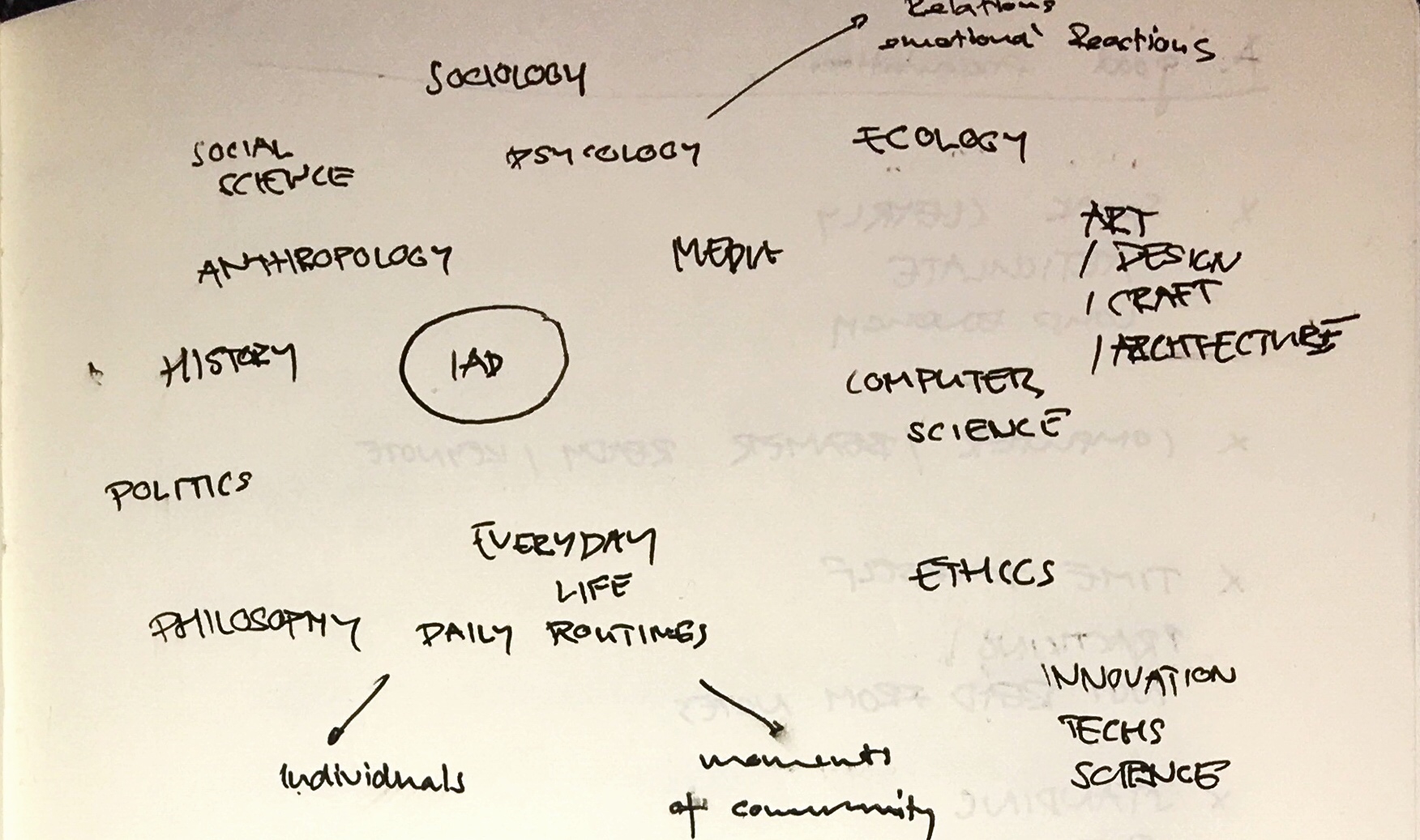
Which disciplines influence Interaction Design nowadays?
A lot of topics/disciplines can be connected to the field of interaction design. For me personally, the most important fields are Art, the Daily Routine, Computer Science, Politics and Science.
Mind Map of Disciplines that influence Interaction Design


 Interaction Design Blog